How to Cleanse Tarot Cards
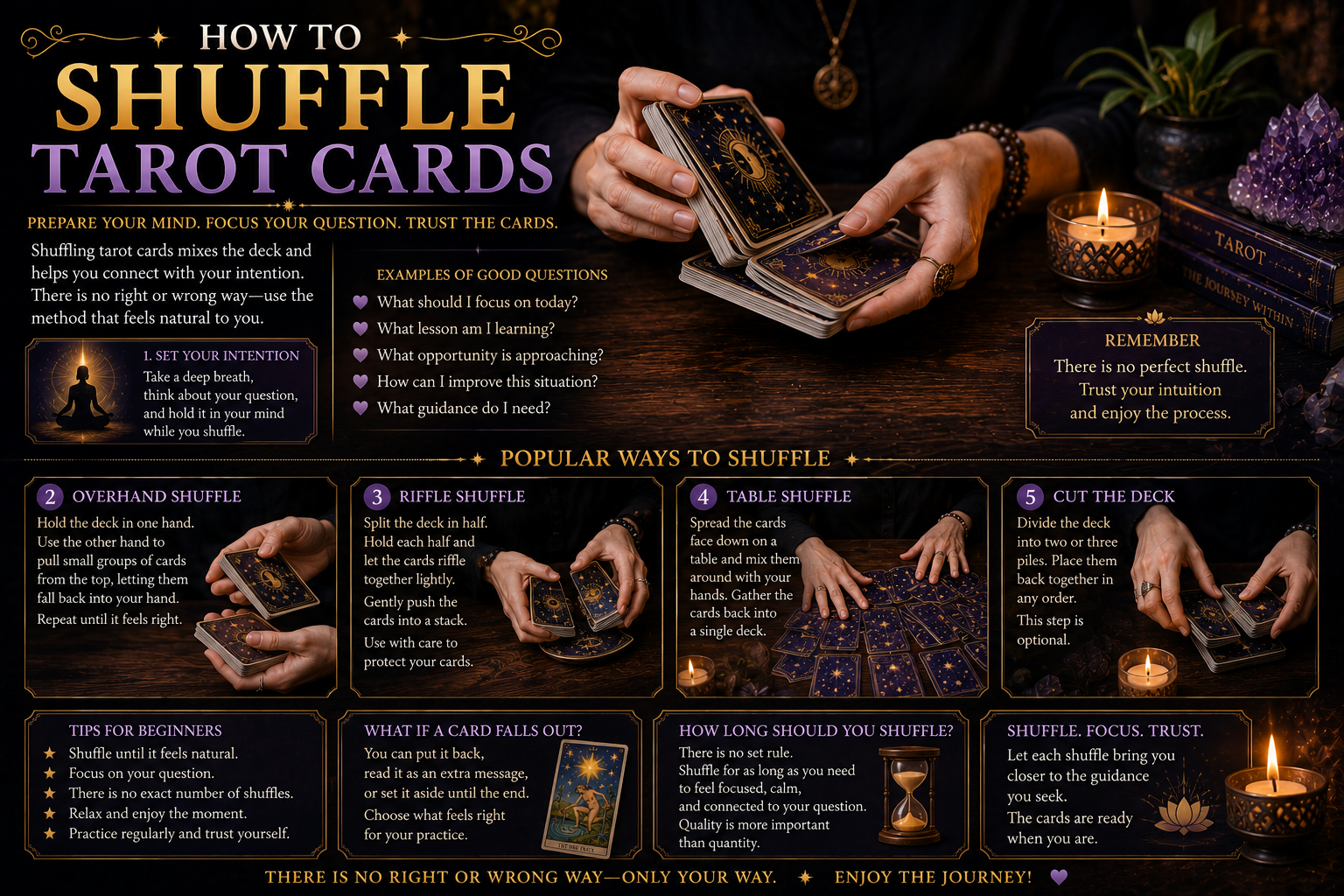
Cleansing tarot cards is a personal ritual used to reset a deck and focus the reader's intention. Discover six simple, optional methods to prepare your cards for their next reading.
How to Cleanse Tarot Cards
Many tarot readers enjoy taking a moment to cleanse their tarot cards before or after a reading. For some, it's simply a calming ritual that marks the beginning of a new session. For others, it's a symbolic way to reset the deck and focus on a fresh question.
It's important to know that cleansing tarot cards is a matter of personal preference, not a requirement. Some readers cleanse their decks regularly, while others never do. Neither approach is more "correct" than the other.
If you enjoy meaningful rituals or want to create a mindful reading experience, this guide will introduce several popular ways to cleanse tarot cards.
Do Tarot Cards Need to Be Cleansed?
No.
Tarot cards work perfectly well without any cleansing ritual.
Many readers simply shuffle the deck and begin their reading.
Others enjoy cleansing because it helps them:
Slow down
Focus their attention
Create a fresh beginning
Build a personal reading routine
Separate one reading from the next
Think of cleansing as preparing your mindset rather than changing the cards themselves.
✨ Try Your Free AI Tarot Reading
Discover what the cards reveal about your love life, career, and future.
When Do People Cleanse Tarot Cards?
Readers choose different moments to cleanse their decks.
Common times include:
After buying a new deck
Before the first reading
After reading for someone else
Following an emotionally intense reading
Before asking a new question
Whenever the deck hasn't been used for a while
There are no fixed rules.
Method 1 — Quiet Reflection
One of the simplest methods requires nothing at all.
Hold your deck in your hands.
Take a few slow breaths.
Think about your intention for the reading.
Many readers find that a brief moment of quiet reflection is all they need to feel ready.
Method 2 — Shuffle the Deck
For many tarot readers, shuffling itself serves as a cleansing ritual.
As you shuffle:
Focus on your question.
Let go of distractions.
Relax your mind.
Prepare for the reading.
This simple routine is often enough.
Method 3 — Meditation
Some readers enjoy a short meditation before beginning.
Close your eyes for a minute or two.
Take slow breaths and clear your thoughts.
Then begin shuffling your cards.
Meditation helps many people approach readings with greater focus and mindfulness.
Method 4 — Moonlight
Some people enjoy placing their tarot deck where it will receive moonlight overnight.
This is a symbolic tradition rather than a scientifically established practice.
Many readers simply appreciate it as a peaceful personal ritual.
Be sure to keep your cards protected from moisture and direct outdoor exposure.
Method 5 — Crystals
Some readers place crystals near their tarot deck as part of their personal practice.
Popular choices include:
Clear Quartz
Amethyst
Selenite
Black Tourmaline
Whether or not you use crystals is entirely a matter of personal preference.
Method 6 — Journaling
Instead of focusing on the deck itself, some readers "cleanse" their mindset by writing before a reading.
You might write:
What am I feeling?
What question do I want answered?
What do I hope to learn?
This simple habit often leads to more thoughtful readings.
Methods to Use Carefully
Some traditional practices involve smoke, incense, candles, or herbs.
If you choose to include these in your personal routine:
Follow fire safety guidelines.
Keep cards away from flames.
Avoid exposing cards to smoke that could stain them.
Never leave candles unattended.
Your cards can be cleansed symbolically without any physical risk.
Can Someone Else Touch Your Tarot Cards?
Absolutely.
Some readers prefer keeping their deck to themselves.
Others happily allow friends or clients to handle the cards.
Both approaches are common.
Choose whatever feels comfortable for your own practice.
Do You Need to Cleanse a New Tarot Deck?
Not necessarily.
Many people simply:
Open the deck.
Shuffle the cards.
Begin reading.
Others enjoy creating a small personal ritual before using a new deck for the first time.
Either approach is perfectly acceptable.
Build Your Own Routine
The best tarot habits are the ones that help you feel calm and focused.
Your routine might be as simple as:
Taking a deep breath.
Shuffling the deck.
Asking your question.
Beginning the reading.
Or it might include meditation, journaling, or other meaningful personal rituals.
There is no single correct approach.
Final Thoughts on How to Cleanse Tarot Cards
Learning how to cleanse tarot cards is really about discovering what helps you feel present, focused, and comfortable before a reading.
There are no mandatory rituals and no universal rules.
Whether you simply shuffle your cards, spend a quiet moment in reflection, meditate, or create your own personal routine, the most important part is approaching each reading with an open mind and clear intention.
Your connection to the cards grows through regular practice—not through any single cleansing method.
Frequently Asked Questions
Do tarot cards have to be cleansed?
No, cleansing is completely optional. While some readers enjoy it as a symbolic way to reset their energy, many experienced readers never cleanse their cards at all.
What is the easiest way to cleanse a tarot deck?
The easiest method is simply shuffling the deck while focusing on your question or taking a moment of quiet reflection to clear your mind.
Which crystals are best for cleansing tarot cards?
Popular choices include Clear Quartz, Amethyst, Selenite, and Black Tourmaline. Many readers place these near their deck to symbolically reset the cards.
Should I cleanse a brand new tarot deck?
It is not necessary, but many people enjoy a small personal ritual like shuffling or meditation to welcome a new deck into their practice.
✨ Try Your Free AI Tarot Reading
Discover what the cards reveal about your love life, career, and future.
Helping users explore tarot, spirituality, love guidance, and AI-powered readings.